Wednesday, January 3, 2024

Smoke Signals - 16 Psychin' Hits (c. 1985?)


This is it. 

This is the album I wish someone could’ve given me 20-some years ago when — head full of Human Instinct and Jesse Harper — I arrived on these fair shores expecting a plethora of the same: head music. I’ve since tried everything I could find: Ticket, Think & Taylor, Space Farm, Space Waltz & Space Case (etc.). I’ve learned about and loved garage psych and paisley pop, academic electronics and exploratory noisescapes. 

But only snippets pop up of smoky, speculative psychedelia, the sort just chockablock with epic groovy noodlin' and lyrics psycho-logically philosophisin' on reality, truth, outer-space and suchlike. 

A recent deep dive into NZ Brass- and Jazz-Rock, and the Fusion connections to the Canterbury (UK) Scene, led unswervingly toward finally sorting this compilation. Brass Rock is a vibe I still struggle with (I’m sorry, Quincy Conserve, I’ve tried) and Jazz-Fusion is a genre so shunned that even its secret fans dare not speak its name. But horns in Aotearoa make sense: brass bands were part of the fabric of society; one only needs the disappointment of op shop record bins to show how many albums of this stuff were released.  

There’s a fair amount of Blues-Rock on NZ records too presenting as heavy psych; despite the sometimes eye-watering tripadelia of the cover art, the sound inside the sleeve is just young dudes riffin’ on old tropes (and I mean dudes — there are only two women on this whole collection). I hear snotty drunken aggression, more booze than pot, and sometimes a chest-puffing competitive cleverness. 

This lot, though, concentrates on grunty grooves -- finding that pocket and digging deeper -- cool-ass sounds to tickle your noodle while nodding that noggin in deep agreement with your personally sparkly inner travelogue: yeah, maaan, yeeeeeah!

I've left off the two biggest hitters, Human Instinct (and Jesse Harper) and Space Farm to kick straight in with a brass-led track from Dr Tree, who are joined by The Fourth Way and the 1860 Band to fuse head with hips; semi-acoustic psych from second-phase Tamburlaine, the mysterious KD3, Lutha and Chris Thompson; Ian Carr's Nucleus and Pacific Eardrum repping the Canterbury Sound; heavy rock from Ticket and the pre-Bitch/post-Clevedonaires Cleves; proggy Ragnarok and Aellian Blade; spiritual soaring from Powerhouse; and electro-psych from Free Radicals.

One wee treat for me is Golden Harvest’s cover of Dylan’s ‘All Along the Watchtower’, which reflects Kevin Kaukau’s heavy Hendrix fixation, but swaddled in the glossy disco-funk they’re known for. Stick around for that track's instrumental second half: a kaleidoscopic Kaukau quest drenched in effects, electronics and studio wizardry.

The cover art is from a photo by Theo Schoon of Rotorua mudpools, which has been painted over [Schoon -- who selfishly appropriated Māori art and literally painted over priceless rock art taoka of Te Waipounamu -- can get stuffed]. 

This is the first comp I've seen of just relentlessly heavy EnZed psych jams, and believe me it hits.  


Sunday, July 17, 2022

David Hollis - After All These Years (1979)

'Lost Classic' is a term thrown around a bit by self-appointed taste merchants. Heck, I've posted 50+ forgotten masterworks at Switched Out. Come along then, listener, and enjoy yet another recovered quintessence. 

A coupla decades ago, I left New York and the mushrooming 'New Weird America' scene: a big hazy hug of variegated freaks playing free-jazz, -noise, and -folk. Arriving in Aotearoa as the Chris Thompson s/t album was first re-ished, I was psyched to hear EnZed's take on psych-folk. Looked forward to listening to heaps of that sort of thing. Well there's not really heaps of this sort of thing. But there's y'know, heaps. 

After All...'s opening track 'You Said I Love You' is totally vibe-ulous with that Thompson record: tinkling labyrinthine finger-picking in a lightly mediæval-ish mode. 'Phantom Lover' trips further along l'ancien phantastique, frilled with flute, mandolin murmurs and a rubbery bass drum thumping a measured, unembellished 'bwawmp'. Hollis's voice is soft and high, gentle and warm -- even on the slightly mean-spirited blues rocker 'Streets of Desire'. 'Sounds Beneath the Leaves' is a wordless return to idyll form, segueing through sweet birdsong into the heaviest mind-folker on the record, 'Song to Siddhartha': guitar, vocals and 'synthesizor' by Hollis, with hypnotic tabla by the mysterious Dr. Balachandran.   

Side two opens with the title track, a wee sweetmeat easily imagined as a tv famcom theme song -- just conjure up your own 80s suburban domestic mind-montage! The soulful 'Rendezvous' slots comfortably amongst the Ramsey Najm record recently posted here: dual-tracked sax and tenderness. 'I Want To Make Love Loving You' is a super-cute country song: harmonica, fiddle and slide summon a sunny snapshot of country courtin'. 

Then whoa, 'Who Knows' takes us to flowerchild church, floating in a capella polyphonic wide-eyed 60s-style wonderment, Hollis's sun-soaked mellifluity reverberating in your chest and cerebrospinal cavities. 'Deepening' like, keeps us there -- in that kaleidoscopic grassfed sunspotted timelessness; mandolin, tabla and mournful french horn redoubling the sweet reverbed melancholy. 'You Lift Me With Your Love Babe' is the second blueser, then a slow-motion smoky tumble back to the heavy seventies -- drifting along on the feathery 'Sail Cloud'.

My minor quibble about this record is that the compiled order presents a range of styles -- all well-represented, -arranged and -performed -- which are together a bit disjointed. And this is a record that needs to be jointed, got me? Like, the title track is sorta schmaltzy, and the jumpy blues numbers would've made a solid seven-inch a- & b-side -- so why drop 'em in amongst the sleepy-deep stonedness and guileless philosophisin'? 

For you, I've rearranged the tracks into a slightly longer psych-pside (ptwenty-psix minutes) and a pop'n'rock side (twenty minutes) [feel free to re-rearrange -- the magic of empeethree!].  

Side one: highest recommendation! Side two: [bonus tracks]

Sunday, March 20, 2022

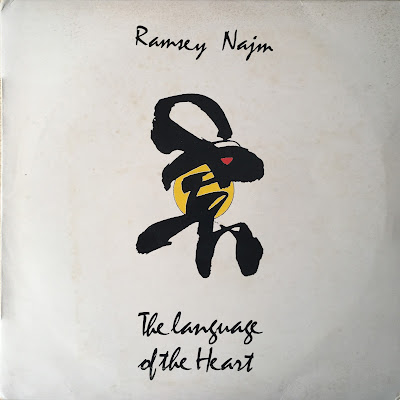
Ramsey Najm - The Language Of The Heart (1987)


An utterly unique and ineffably elegant one-off -- a baroque-folk yacht-jazz masterstroke -- from an enigmatic American ex-pat adept on the Ode label, advertised as 'an emotional journey into regions of a heart filled with joy and lament, darkness and exultation'.

Backed by local jazz notables (Brian Smith, Nigel Gavin, and Pam Grey) and mixed and engineered by studio savants (Victor Grbic and David Hurley), The Language of the Heart is heartbreakingly lyrical, constructively melancholy, and meticulously arranged for maximum suavity.

Ramsey Najm was a documentary filmmaker and singer-songwriter from the States, a Palestinian-American who came to Aotearoa/NZ in the 1980s as a self-described '"cultural refugee" from the vast wasteland which is America today'. 

While still based in the US, Najm fronted a punk/new wave-era band called 'Ramsey Najm and the Nervous System', with a live recording or demo cassette from 1980 listed in the Jim Fouratt papers at Yale. Najm also opened for florid folkies Compton & Batteau, the furry and fabulous Flying Burrito Brothers, pacifist power-poppers The Hello People, and honorary Herb Joe Walsh. 

There's not a lot to reference beyond the album's included press release these few mentions from the early 1980s, when he filmed a pioneering documentary on breakdancing: Breaking: Street Dancing (1982). This doco showed on New York's Channel 13 in June that year, also at El Museo Del Barrio in Spanish Harlem, and won a merit award at 1982 Athens International Film/Video Festival in Athens, Ohio:

'Breaking, Mr. Najm (pronounced nah-zhum) explains, ''is a way that gangs of kids, mainly in the Bronx, but some in Manhattan, can still compete with each other for territory and for machismo. But, instead of doing it violently, a la West Side Story, they do it through dance.'' In the duel by dance, each chosen stalwart tries to out-step, out-shake and out-move the opponent.' (New York Times, June 20, 1982, Section A, Page 2)

In a March 1982 issue of The [Film & Video Monthly] Independent, the New York-based independent producer Najm placed a classified seeking 'intelligent, meaningful, contemporary stories of any length for fall shooting. Prefer existentially-inclined material illustrating angst & conflict in modern world.'

Najm's vocal, instrumental and scripted delivery are all -- always -- humbly, gutsily sincere: on 'Rodeo' reminding me of a breathier, smirkless Townes Van Zandt; and soaring wordlessly in the raranga of sax and keys at the end of 'Nadia'. 'In the Golden Orchard' could be an arena ballad if it weren't so introverted (see also the Pink Floyd-ish fretless bass duet on 'Imprisoned on the Outside'). The minimalist roundabout pianoscape of 'Always a Circle to Mend' is just lightly adorned at the end with sympathetic synth and thrifty kick-drum punctuation; while album closer 'Set My Body Free' pairs Najm's ardently transcendental vocal and his own gentle acoustic guitar with a six-minute soft crescendoing of thick sawtooth billows, seabird-feedback lead guitar, shuffle-chug snare and a wide-stereofield multi-Najm chorale. [Listeners please note: my copy has gentle surface noise throughout.]

In these unsettled days, like many I suppose, I'm spending a fair amount of my after-hours in circuitous soul-searching. The unashamed candour of Najm's reflections on this record gently mesh with his considered instrumentation into deep'n'heavy comfort: like a weighted blanket under an emotional support labrador. A review in the NZ Herald from 22 May 1987 finds likewise: 

'There is a small, rewarding corner where jazz and folk intersect... that's where you will find guitarist/vocalist Najm. [His] easy-to-enjoy vocals, his understated poetic lyrics and the gentle arrangements offer a lot of comfortable pleasures. More soon we hope.'

This is Ramsey Najm's only published solo recording that I can discover: an immaculate passed-over opus from a singular, sensitive, self-searcher and his complementarily cultivated ensemble, wrapped up in enchantingly imaginative production. And I'm hopelessly in love with it. 


Sunday, January 16, 2022

The Digits - Dog Wrestled To Ground By Underarm Combat Flea (1981)


What a peculiar delight! DIY garage psych from 1981 Wellington, like The Godz and Chrome had a high school basement supergroup jam-band. An unexpected gift from contributor Mick, this record is rare as -- only 200 copies pressed, and probably most of them totally forgotten. Unfair dismissal! Until now, dear listener...

Side one starts reasonably songy-song conventional with 'Friend Who Sits Beside You' -- though not without naïve charm plus some scungy background lead guitar -- but it just gets weirder and better from there. 'Night Time' and 'Vege Man' are wistful acid à la Syd, 'A Throw Away' and 'Modern Viewee' are munted budget Hawkwind ft. Helios Creed, while 'After Sausage' gets all nut-gone flakey. 'Mental Blanco' raw powers its punk roots with angle-grinderish soloing, and 'Perfect Evolution' powerpops with filtered white noise, thereminny howls and moog-y bloops. 

Side two is presented as one long piece (though some -subtle and not-so splices are evident) albeit with eight different track titles -- Faust Tapes-style! The linked files include the option of either one long complete side two, or individual best guesses for separate named tracks. It starts strong and there are truly some great bits, but as a side of long-playing vinyl it's maybe slightly omphalosceptically circumlocutory -- and just a wee bit familiar: the sort of smoky jamz I've heard in warehouse gigs from mid-90s Philly to mid-10s Dunedin. Not bad if they're your friends and you've got some cheap beer! I fully dug the whole dang thing though so see how you go, yo.

A long drive and a ferry ride from the FNun releases of the same year: it's post-punk (I guess?) and homemade but unafraid of (admittedly cheap-arsed) studio techniquery: expect hard-panning as stereo-tremoloing (or clumsy psychoacoustic headfuqz), skilsaw fuzz, flanged vocals and/or drums, cheap reverrrrbbbb and whoop-whoop-delays.

Gary Steel interviewed prime Digit Malcolm Pickup and wrote a few reviews at the time. Have a read here.

Source vinyl is quite crackly, but in a warmth-adding rather than hifi-snob-snubbing way. Includes three bonus tracks: The Digits' two songs from 1981's Wellingtonzone comp, plus the sole release from singer/guitarist Pickup's previous group Smashed Executive, 'T.V.' released on the 1979 Radio Windy Home Grown Volume One comp.


Saturday, August 28, 2021

More Whispering Waves - 18 Silken Hits For The Gin Palace Or Crib (c. 1997)

More Silken Hits -- NZ AO-/Soft-/Yacht-Rock from the Seventies and Eighties -- brought to you by the same faceless megacorp who comp'd your Silicon Hits. 

A second tasteful selection of upbeat soothers -- from love bug Anna Leah’s hooky-af self-penned slow jam to the sound of a seaside afternoon cafe quintet; plus a New Age James K Baxter bossanova, teenage rock’n’rollers now relaxed and all grown up, and ex-‘Nature’-ists salacious snakebit soul. Forgotten and underrecorded folks like Fire Exit and Jade — here rescued from RNZ’s Radio Trax promo LPs — cheek to cheek with peeps on sweet boutiques like Tartar and Charisma, and those on heavy-hitting acronyms EMI, CBS & RCA. 

Sleek, streamlined and satiny, this collection uncovers and uplifts uncoloured funk, throbbing grunty grooves, and effervescent weltschmerz from these tanned and glassy bands, featherlight singer-songsters, shimmering studio whizzes, session legends, rising stars and also-rans.


And Prisms The Ocean


Tuesday, May 5, 2020

Whispering Waves - 18 Silken Hits For The Gin Palace Or Crib (c. 1996)

From the folks who brought you the Silicon Hits series, comes the first(?) Silken Hits compilation of the best of NZ's Soft-/Adult-Oriented-/Yacht-Rock.

These tracks from '72 - '83 serve up a soft and sunny coupling of singer/songwriter & soul sensitivities, mixed with disco & funk lubricity and produced in second string Steely Dan sophistication. Sometimes there's sax or brass, maybe a string section, almost always an electric piano. Tune in to tight & dirty grooves, seriously cheesy sleaze, elegant arrangements, pastoral post-disco chill-outs, bouncy soul serenades and country funk ballads.

Dismissed at the time by supercilious hipsters (and now championed by the same), these smooth'n'lite sounds soothe and swaddle and deserve a second and third listen in these nervous times. Suck up the sensual sentimentality, luxuriate in the pricey production, and bob your noggin to the rhythms of Whispering Waves.


I Want The Sand In My Shoes, I Want The Wind In My Hair
 [link removed]


Monday, December 30, 2019

You Were Dancing With My Mind Vol. 2 - 23 More Silicon Hits Of The 1980s (c. 1990)

Folks in Aotearoa are happy to trip to the past via 2LP NZ punk, funk or garage rock comps, and boundlessly bang on about our Flying Nun or Free Noise scenes -- but good-time synth-pop is easily our most unloved genre. Which is a shame, because although it was never a very big or very strong scene in eighties Enzed, we put out some pretty solid tracks.

Volume Two of this series collects a complex, chirpy swathe of minimal wave, electrogoth, Peter Gabriel-/Kate Bush-inspired sophisticated pop, R&B and B-Boy music, a melodramatic Bowie clone, and sweet throwaway love-pop -- all awash in the timeful silicon sounds of Rolands, Korgs, Moogs and Yamahas.


Deep In My Mind I Rehearse The Scene


Saturday, May 4, 2019

Autumn Jumbo Fun-Pak: Onset/Offset Cassette Comps (1983-87)

Digging back into the fertile fields of the 1980s Christchurch underground. Many of these songs were comped on the Krypton Ten 2xLP, but now you can listen to them in all of their 35-year-old, 'tape-saturated', hissy and disintegrating glory! Read all about Onset/Offset in Andrew Schmidt's article here. 


20 Krypton Hits Volume One (1983)


Krypton Green (1984)


Krypton Red (1984)


Krypton Amber (1984)


KVEETWO (1987)


Sunday, April 29, 2018

Besser and Prosser - Dark Wind/Spring Rain (1986)

New Zealand Composer Edition: New Music For Violin and Piano, by Jonathan Besser & Chris Prosser.

Both artists have been involved with electronic music, though I've only heard Besser in Free Radicals. But this part of their practice is evident in the record's opening suite.

Extended techniques expand the timbres in the Three Impressions of 'Dark Wind': in Part One, reverberating wooden raps and clouts on bodies of piano and violin, strummed piano wires and whispery un-rosined bowing wheeze huff and heave like the sea; Part Two's tinkling keys ground the flutter and swoop of birdcalls/-flaps/-hoppings chivvied from the fiddle; whilst Part Three feels electronically augmented, with low piano strings struck odd-chiming like ring-modulation, and paper slipped 'twixt the violin strings sizzles and snaps 'midst buzzy sawtooth scything. Unambiguously bewitching.


Best Prose


Saturday, March 24, 2018

Autumnal Jumbo Fun-Pak: The Unmatchable Robert Cardy (1987-88)

Continuing our Christchurch cassette excavations: home-tapes from the bountiful Bob Cardy (Axemen, Shaft, etc.).

Traditional EnZed bedroom studio stuff in the orthodoxy of Chris Knox or Kraus, Alastair Galbraith or Darcy Clay or Stefan Neville -- like The Residents recording The Basement Tapes or Jonathan Richman's Thinking Fellers tribute act solo-recorded on the dole, all dolloped in Strapping Fieldhands' sloshed slapdashery.

81 songs on six tapes over two short years! Cheesy preset synths and sound effects, home organ, drum machine and double-tracked vocals, guitar and bass and banjo. Riffs and raffs, Velvet earworms, effortless songcraft out the metaphorical wazoo, plus jokes 'n' puns & drones 'n' gems a-poppin'.

Down- and overload on this underlooked ol' wunderkind! Unreservedly recommended.


Fat Spring Coal & Diamonds In The Lava (1987)


Lallapaloosa (1987)


Public Address (1987)


18 Milky Bar Odes (1987)


A Thousand And One Stag Nights (1988)


Gloss (1988)


Saturday, December 23, 2017

Drone - Drone (1989)

Debut album from late-80s Auckland minimalist avant-garde art schoolers Drone. Not what I expected when I discovered them around the turn of the century, my post-Free Noise sensibilities presuming heavy electric drunge.

This is not that: instead it's sombre and sober, astringent acoustic strings with vocal harmonies and scant samples, detuned chimings and chants braided into unison rhythms. Rich and thick (like good American ketchup or bad American presidents), sensitive and affecting, very smart yet from the gut.

The marching piano on second track 'Carcass' bounces like an obscurely perky This Kind of Punishment, while 'Music for Guitar + Piano' could be a Terry Riley-led Abel Tasmans painting a McCahon. Other tracks call to mind a synth-less 
Marie and the Atom, stripped down or vigorous as in knotty ‘pop’ tracks like ‘Lofty’ by Out of the Compost, or ‘Black Thoughts’ or ‘Ethiopian Dream’ by Thin Red Line. 

Get the whole story at AudioCulture, and pick up their first 7-inch here.


This Carcass I Beg To Slaughter


Sunday, December 3, 2017

The Semmy-Compleet Smelly Feet (1981-82)

Brent Hayward -- a stabler Syd Barrett, a glib Pip Proud, a scatter-brained Bill Direen, a slipshod Crispin Glover -- the hands and mind behind Shoes This High, Smelly Feet, The Kiwi Animal, Fats White (and so on). Earnest weirdness and unsmiling silliness which swings from intimate revelation to dispassionate observation track by track. Andrew Schmidt's got a full write-up on Brent Hayward's post-Shoes This High story on AudioCulture. 

This post is 'semmy-compleet' as the third 7-inch can be found at the excellent Forgotten New Zealand 45s blog.

Smelly Feet - As Seen On TV (1981)

The ideal initiation into the Smelly Feet scheme, from the seasick and slinky 'North Of Anywhere' to the sweet ennui of 'A Song For The World', then on to the miniature municipal metaphor 'Vegetable Market' before merrily surrendering to the apocalypse with 'E.O.T.W.I.T.'. 

A scan of the complete fold-out 7-inch sleeve is included. A wee bit of distortion on this rip. 


Smelly Feet - OHMS (1981)

The punkest of the three releases presented here -- 'OHMS' is shouty and strident, repetitive like Kiwi Animal's 'Woman And Man Have Balance', intercut with lyrical nihilist declaimings. Then there's the grotty-vibed 'My Festured Toe' [sic], and the chastising 'Comparisons'. Detuned, clatter-stringed guitar. 

No cover. Quite a crackly rip, sorry. 


Smelly Feet - Left Odours (1982)

Snippets, quite a few complete songs, and euphonious streams-of-consciousness -- 22 total tracks recorded at home and gigs, on four-track and portable tape recorders. The good stuff here is like first-take Kiwi Animal, Hayward's (admittedly idiosyncratic) songcraft and playing both edging toward that Brent and Julie apogee. Not at all a 'for the real fans only!!!!' Dead Letter Office, rather a rare find -- like a faded denim jacket in your size at the op shop which is both impeccably zirconia-bedazzled and prog-metal patched. 

The first three pieces on the a-side are furiously lofi -- like, no-fi -- and I worried that the tape was degraded, but by ‘Kenny’ they are much clearer, so hang in there. It's promptly obvious from the varying track quality that the indiscriminate fidelity is intentional. I've stereo compensated as it was heavily left-leaning, and boosted the volume of the ultra-lofi bits. 


Sunday, September 10, 2017

Nux Vomica (1985-88)

More obscure Chch! Nux Vomica were an early project of Lawrence Kennett and Lisa Preston, later of The Portage.  Kennett's first band, The Droogs, released one single around 1981 on cassette, 'Fuck Your Brain', which was re-pressed on vinyl in 2005 (under the name The Pitts).  Kennett stepped back from music for a bit but has recently begun playing again with other Garden City refugees now resident in Dunedin: Bob Cardy and Mick Elborado. Preston continues to perform, with bands such as Snort and Loliners. Bassist Phillip Hubbard disappeared from the scene in the early 90s, and drummer Chris Small died last year.

Nux Vomica - My Life To Live/T.V. Producer (1985)


This 7-inch is quite crackly but so what -- it's p*nk as f*ck. 'My Life To Live' sounds like one take, live in the studio, with some telephone-mic vocal overdubs -- slurred'n'shouty, organ'n'bass, grotty staccato garage. 'TV Producer' might be brutally tape-spliced from several takes, with different EQs and mic placements, giving the whole thing a nicotine-stained short-of-breath live-reptile-show caveman-minimalism drive.

Recorded and co-produced by The Axemen's Steve McCabe.


I Know What'll Sell


Nux Vomica - Live '85 - '87 (1988)


Recorded at the Gladstone, in Motueka and Takaka, and in rehearsal.

Heaps more guitar on this (if there was any on the single, it was totally inaudible) -- smoky, speed-thrilling, raw cuts from the Gladstone:  'Adoption', 'My Life To Live', and the Very Metal 'Gnome'.

Two songs from this -- 'Sin' and 'Swamp Dream' -- were re-recorded with The Portage on the Thirteen; Thirteen twelve-inch. 'Sin' and seven-inch A-side 'TV Producer' get roisterous in Takaka with Alan Wright on sax skronkings. The 'Swamp Dream' live rehearsal is murky-as motorik, like Sister Ray gets stripped-down and sweaty. Acoustic duet 'Good Things' could be a Kiwi Animal outtake. A couple tracks are just simple snippets of the best parts: 'Keeps on Coming' --which feels snotty and primitive like The Stones [NZ] -- starts suddenly, cuts abruptly.

Their originals are the best bits, but the tape finishes with a couple of covers of Lou Reed and The [Rolling] Stones.

[Note: There is a noisy tape glitch toward the end of the heavy, heavy, psych-groove 'Iron Pineapple'. I've done my best to splice the sound together. Not sure if the original tape was recorded that way (à la The Puddle's live records) or due to deterioration from earthquake liquefaction residue.]

Rough as guts, fucked up and sweet, familiar and a bit of strange. Highly recommended.


If I Kill You In My Passion


Sunday, July 16, 2017

The Osterbergs - Freak Power (1990)


More licks from the unplumbed pockets of Mysterex maven Andrew Schmidt: the scritchy, shouty sounds of Detroit devotees The Osterbergs!

"The Osterbergs out of east Auckland were regulars at the Queen City's inner-city music dives in the late 1980s, and early 1990s, on the diverse bills of the time.

"Their wah-driven Stoogoid punk sound -- the guitar courtesy Mark Jones, anchored by drummer Shirley Charles and bass player/vocalist Paul E. Snake -- had an endearing, nagging charm, well captured on their only release for Auckland's Onslaught Records.

"The original trio of Shirley Charles (drums), Paul Edwards (bass/vocals) and Mark Jones (guitar) had been joined by Lance Strickland on second guitar, who broadened the songs and gave it an unscripted edge.

"Changing their name to Freak Power, the quartet would go on to support many like-minded touring groups, and release a ten-inch EP on Wildside Records."

The Osterbergs – Freak Power (Onslaught Records)

Side 1
Your Time
Saccharine
It Burns

Side 2
Everything
Strung Out

Rec’d by Matthew Heine at BFM in Auckland, 1990

Paul Edwards – bass/vocals
Lance Strickland – guitar
Mark Jones – guitar
Shirley James – drums


Borrowed Amps


Sunday, June 4, 2017

Vague Secrets - Vague Secrets (1985)


Sole album from Christchurch's Vague Secrets, and the first album to feature filmmaker John Chrisstoffels of The Terminals, The Renderers, et al. The same line-up backed Bill Direen as The Builders on 'Lovers' from C0NCH3.

Taut and rangy, with a tight rhythm section and a number of hip influences, they're sharp and smart but just faintly unfledged. Album opener 'Don't Come To Me' is post-punk-via-the-pub-circuit, but from the second track onward it's mostly earnest, slightly astringent, fairly elaborate pop along the lines of Blam Blam Blam, Thin Red Line, The World and The Orange. Perhaps it's piqued by the 'Vague' from the name, but amidst otherwise self-assurance there's a seeming hesitancy, a non-commital to form: wavering between Talking Heads-ish Caribbesque rhythms of 'Africa', straight-up drawling folk-pop with 'An Ending', and various other McGlashanisms before closing with a charming instrumental acoustic psych-pop miniature, chiming and peppy, the appropriately appointed 'Dunedin'.  All up, it's like a rich, evocative -- but somewhat frustrating -- early chapter from an unfinished story.

The pressing is on the edge of lo-fi. My copy is near pristine, but it's sometimes weedy, distorts easily, and some tracks sound practically mono.


Here come the vultures


Sunday, May 21, 2017

Don't Make Noise (1988-89)


Seemingly forgotten South Island free improv, ex three staunch avant-gardists in late 80s Christchurch.


Don't Make Noise - Don't Make Noise (1988)
The trio's debut s/t cassette, with Greg Malcolm on guitar and cello, Paul Sutherland on electronics, radio, tapes, shenai etc., and John Kennedy on drums and percussion. Side A opens with an Eastern European impression -- Malcolm on cello and Sutherland on shenai -- before moving into timeless non-jazz/non-jamband Western free improv: feedback, drones, toy piano, radio and electronics, alternating with playful, artful, instrumental flourishes. By the B side, there's no dismissing their seriousness -- reductionist, lockstepped, insistent, clamorous clangour -- before revisiting Radical-Yiddish strings and rusty-hinges, shimmering cymbals and wheezing seabirds on the last piece.


pūtangitangi


Don't Make Noise - This Is The Place (1989)
Second (final?) cassette from DMN, featuring Malcolm's future Breathing Cage bandmate Michael Kime on double bass on the A-sides. Fragile and considered gauzy bits alternate with trashy rockist shuffles, Sandoz Lab-esque & Art Ensemblish 'little instruments', samples, wailing amps and hissy-crackling Moondog minimalism. Thirty minute B-side live at the Robert McDougall is astonishingly accomplished, complex and riveting -- the type of improvisation which gets audiences asking if it's a composed piece.

Aside from their short lifespan and limited small-run releases, I can only guess at why Don't Make Noise never made it into the NZ Free Noise canon. Kennedy and Malcolm both have avant-pop backgrounds or foregrounds (Thin Red Line and Breathing Cage, respectively), and there are moments which are aesthetically perhaps too Downtown jazz-ish for the Le Jazz Non compilation (let alone a few years too early). Regardless of their obscurity, the strength of material on these two tapes -- off-centre, exciting, droll and elegant, and both more serious and farther out than contemporaneous recordings by The Dead C -- merits their re-listening and reappraisal.


They called it, 'The Sound Barrier'


Sunday, May 7, 2017

Paul Sutherland - Sea and Sun (1985)


A mid-solo-period C30 EP release by Christchurch-based Paul Sutherland of Into The Void, Don't Make Noise, and Les Baxters. 

Two sidelong improvisations of radio noise, electronic toys, tapes and layered tape loops and tape hiss and turntables and tape speed tricks, mechanical squeaks and percussive blasts -- all hard-panned, delayed and ping-ponging. At times a one-man-AMM felicitously iterating Reich's 'Piano Phase' and Riley's 'Music for the Gift'.

Slow and low-key, connoting robo-throat singing, ambient garage rock with an 808, hydrophone gamelan wind chimes, martial marches with cowboy bass lines and chirruping rewinds; with chance guest vocals from white noise-modulated Mockers and a chopped-up Maxwell H Brock from A Bucket of Blood. Gorgeously singular and highly recommended.

Saturday, April 15, 2017

A David Watson Decade (1986 - 1996)


Co-founder of the Braille Label in 1984 and curator of the first altmusic festival in 2001, ex-Wellington improvisor David Watson has lived and worked in New York since the late 80s.


David Watson - Reference (1986)

An album of low-key beauty recorded the year before he left for NYC, Reference is what it says on the tin: a catalogue raisoneé laying out Watson's pluralistic thing. 'A Code' starts off with a lo-bit From Scratch-style sampled bamboo rhythm and a squall of squealing riffage multi-tracked with back-masked guitar drones. 'To Read A Cipher' follows, skipping between snippets of Fahey-like and Donald McPherson-esque acoustic noodling, while its counterpart 'To Write...' bellows Bailey-ish and bell-like with clockwork zithers. Side Two's ten minute epic 'The Arithmetic Symbol 0' opens with amp feedback and drastically stereo separated signal/delay, sidesteps into acoustic improv then on to microphone-on-strings, atmospheric slide and distant rhythms with rusty hinges. The urgent 'To Unravel' plays ping pong with bowed drones and volume swells, with hypnopompic bass and insistent muted-string-strumming snowballing into the reverb and squeaks of a background basketball gym. Pensive but never po-faced, there is a playfulness inherent in its experimentalism, much in the manner of Greg Malcolm. 


David Watson - Ribbons of Euphoria (1996)

This CD was produced by the Dunedin Public Art Gallery in 1996 for inclusion in its short-lived Midwest magazine. It includes four tracks for 3x bagpipe ensembles, for which Watson was commissioned by the DPAG to celebrate their relocation to a new building in the Octagon. Having worked in the centre of Dunedin for more than a decade I've gritted my teeth through entire weekends of competing pipe bands, but there's definitely dramatic power in what Watson describes as the 'real savagery in the sound of the pipes'. Ten years on from the earnest and retrospectively tentative charms of Reference, Watson's potent multi-tracked solo electric guitar works are more fully developed and realised, all serious and exciting, academic and musical. Tracks 'Delicious' and 'Candy' pit Tony Conrad vs Robert Fripp, while the expansive 'Steak Knife' is all that's great in his earlier works advanced with all that he's learned from his Downtown collaborators like album contributors Ikue Mori and Otomo Yoshihide. Includes scans of his interview with Midwest. 


Wednesday, December 9, 2015

Summertime Super-Fun-Pak! NZ Poetry on Vinyl -- Part One

Two records from the early 1970s -- private pressings for Waiata Recordings. All the golden voices from days of olde and yore, ever and anon are hither and yon -- Janet Frame, James K Baxter, Denis Glover, CK Stead, Sam Hunt, Bill Manhire, Charles Brasch -- reading their own works.

The recording quality on some of these tracks is simply shocking. My copies of the original vinyl are NM, but probably as a consequence of packing too much onto each side combined with the limitations of the original recordings, the sound varies: prepare for level peaks and drops, pops, echoes, and distortion. 

I won't try to write about these as poetry is mystery to me. I just wanted to digitise them for myself so I thought I'd share them with you. 


New Zealand Poets Read Their Works (1974)


New Zealand Poets Read Their Work For Children (1974)


Sunday, October 25, 2015

You Were Dancing With My Mind - 24 Silicon Hits of the 1980s (c. 1989?)


This one's been a long time coming (obviously, as this blog's not been updated in 16 months or something). Very excited to post this.

While enshrining the eighties in EnZed music, many serious musos scoff at the synthesizer, though other keys are all over underground records and pop charts; countless Flying Nun bands are built around that sound of a garagey organ.

This recently rediscovered collection is a celebration of the synthetic aesthetic, from The Body Electric's use of frequency shifters to sing like cybermen, to Simon Raby aping arpeggiators on the Korg. Included are some of the biggest New Zealand synth-pop hits of that decade -- 'Computer Games' and 'Sierra Leone', The Mockers and Split Enz -- with a couple of genuine obscurities and shoulda-been contenders.

You can hate yourself for loving these tracks, but you know they're the songs you want to dance to when that cheap speed kicks in at the flat party at 3am. If, y'know, you're not actually way too old to do that sort of thing anymore.


Listen to Music Created by Machines