Showing posts with label eighties. Show all posts

Sunday, March 20, 2022

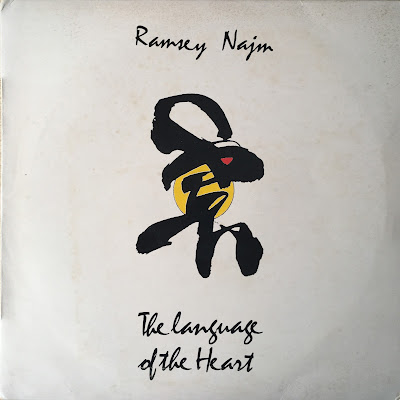
Ramsey Najm - The Language Of The Heart (1987)


An utterly unique and ineffably elegant one-off -- a baroque-folk yacht-jazz masterstroke -- from an enigmatic American ex-pat adept on the Ode label, advertised as 'an emotional journey into regions of a heart filled with joy and lament, darkness and exultation'.

Backed by local jazz notables (Brian Smith, Nigel Gavin, and Pam Grey) and mixed and engineered by studio savants (Victor Grbic and David Hurley), The Language of the Heart is heartbreakingly lyrical, constructively melancholy, and meticulously arranged for maximum suavity.

Ramsey Najm was a documentary filmmaker and singer-songwriter from the States, a Palestinian-American who came to Aotearoa/NZ in the 1980s as a self-described '"cultural refugee" from the vast wasteland which is America today'. 

While still based in the US, Najm fronted a punk/new wave-era band called 'Ramsey Najm and the Nervous System', with a live recording or demo cassette from 1980 listed in the Jim Fouratt papers at Yale. Najm also opened for florid folkies Compton & Batteau, the furry and fabulous Flying Burrito Brothers, pacifist power-poppers The Hello People, and honorary Herb Joe Walsh. 

There's not a lot to reference beyond the album's included press release these few mentions from the early 1980s, when he filmed a pioneering documentary on breakdancing: Breaking: Street Dancing (1982). This doco showed on New York's Channel 13 in June that year, also at El Museo Del Barrio in Spanish Harlem, and won a merit award at 1982 Athens International Film/Video Festival in Athens, Ohio:

'Breaking, Mr. Najm (pronounced nah-zhum) explains, ''is a way that gangs of kids, mainly in the Bronx, but some in Manhattan, can still compete with each other for territory and for machismo. But, instead of doing it violently, a la West Side Story, they do it through dance.'' In the duel by dance, each chosen stalwart tries to out-step, out-shake and out-move the opponent.' (New York Times, June 20, 1982, Section A, Page 2)

In a March 1982 issue of The [Film & Video Monthly] Independent, the New York-based independent producer Najm placed a classified seeking 'intelligent, meaningful, contemporary stories of any length for fall shooting. Prefer existentially-inclined material illustrating angst & conflict in modern world.'

Najm's vocal, instrumental and scripted delivery are all -- always -- humbly, gutsily sincere: on 'Rodeo' reminding me of a breathier, smirkless Townes Van Zandt; and soaring wordlessly in the raranga of sax and keys at the end of 'Nadia'. 'In the Golden Orchard' could be an arena ballad if it weren't so introverted (see also the Pink Floyd-ish fretless bass duet on 'Imprisoned on the Outside'). The minimalist roundabout pianoscape of 'Always a Circle to Mend' is just lightly adorned at the end with sympathetic synth and thrifty kick-drum punctuation; while album closer 'Set My Body Free' pairs Najm's ardently transcendental vocal and his own gentle acoustic guitar with a six-minute soft crescendoing of thick sawtooth billows, seabird-feedback lead guitar, shuffle-chug snare and a wide-stereofield multi-Najm chorale. [Listeners please note: my copy has gentle surface noise throughout.]

In these unsettled days, like many I suppose, I'm spending a fair amount of my after-hours in circuitous soul-searching. The unashamed candour of Najm's reflections on this record gently mesh with his considered instrumentation into deep'n'heavy comfort: like a weighted blanket under an emotional support labrador. A review in the NZ Herald from 22 May 1987 finds likewise: 

'There is a small, rewarding corner where jazz and folk intersect... that's where you will find guitarist/vocalist Najm. [His] easy-to-enjoy vocals, his understated poetic lyrics and the gentle arrangements offer a lot of comfortable pleasures. More soon we hope.'

This is Ramsey Najm's only published solo recording that I can discover: an immaculate passed-over opus from a singular, sensitive, self-searcher and his complementarily cultivated ensemble, wrapped up in enchantingly imaginative production. And I'm hopelessly in love with it. 


Saturday, May 4, 2019

Autumn Jumbo Fun-Pak: Onset/Offset Cassette Comps (1983-87)

Digging back into the fertile fields of the 1980s Christchurch underground. Many of these songs were comped on the Krypton Ten 2xLP, but now you can listen to them in all of their 35-year-old, 'tape-saturated', hissy and disintegrating glory! Read all about Onset/Offset in Andrew Schmidt's article here


20 Krypton Hits Volume One (1983)


Krypton Green (1984)


Krypton Red (1984)


Krypton Amber (1984)


KVEETWO (1987)


Sunday, April 29, 2018

Besser and Prosser - Dark Wind/Spring Rain (1986)

New Zealand Composer Edition: New Music For Violin and Piano, by Jonathan Besser & Chris Prosser.

Both artists have been involved with electronic music, though I've only heard Besser in Free Radicals. But this part of their practice is evident in the record's opening suite.

Extended techniques expand the timbres in the Three Impressions of 'Dark Wind': in Part One, reverberating wooden raps and clouts on bodies of piano and violin, strummed piano wires and whispery un-rosined bowing wheeze huff and heave like the sea; Part Two's tinkling keys ground the flutter and swoop of birdcalls/-flaps/-hoppings chivvied from the fiddle; whilst Part Three feels electronically augmented, with low piano strings struck odd-chiming like ring-modulation, and paper slipped 'twixt the violin strings sizzles and snaps 'midst buzzy sawtooth scything. Unambiguously bewitching.


Best Prose


Saturday, March 24, 2018

Autumnal Jumbo Fun-Pak: The Unmatchable Robert Cardy (1987-88)

Continuing our Christchurch cassette excavations: home-tapes from the bountiful Bob Cardy (Axemen, Shaft, etc.).

Traditional EnZed bedroom studio stuff in the orthodoxy of Chris Knox or Kraus, Alastair Galbraith or Darcy Clay or Stefan Neville -- like The Residents recording The Basement Tapes or Jonathan Richman's Thinking Fellers tribute act solo-recorded on the dole, all dolloped in Strapping Fieldhands' sloshed slapdashery.

81 songs on six tapes over two short years! Cheesy preset synths and sound effects, home organ, drum machine and double-tracked vocals, guitar and bass and banjo. Riffs and raffs, Velvet earworms, effortless songcraft out the metaphorical wazoo, plus jokes 'n' puns & drones 'n' gems a-poppin'.

Down- and overload on this underlooked ol' wunderkind! Unreservedly recommended.


Fat Spring Coal & Diamonds In The Lava (1987)


Lallapaloosa (1987)


Public Address (1987)


18 Milky Bar Odes (1987)


A Thousand And One Stag Nights (1988)


Gloss (1988)


Saturday, December 23, 2017

Drone - Drone (1989)

Debut album from late-80s Auckland minimalist avant-garde art schoolers Drone. Not what I expected when I discovered them around the turn of the century, my post-Free Noise sensibilities presuming heavy electric drunge.

This is not that: instead it's sombre and sober, astringent acoustic strings with vocal harmonies and scant samples, detuned chimings and chants braided into unison rhythms. Rich and thick (like good American ketchup or bad American presidents), sensitive and affecting, very smart yet from the gut.

The marching piano on second track 'Carcass' bounces like an obscurely perky This Kind of Punishment, while 'Music for Guitar + Piano' could be a Terry Riley-led Abel Tasmans painting a McCahon. Other tracks call to mind a synth-less 
Marie and the Atom, stripped down or vigorous as in knotty ‘pop’ tracks like ‘Lofty’ by Out of the Compost, or ‘Black Thoughts’ or ‘Ethiopian Dream’ by Thin Red Line. 

Get the whole story at AudioCulture, and pick up their first 7-inch here.


This Carcass I Beg To Slaughter


Sunday, December 3, 2017

The Semmy-Compleet Smelly Feet (1981-82)

Brent Hayward -- a stabler Syd Barrett, a glib Pip Proud, a scatter-brained Bill Direen, a slipshod Crispin Glover -- the hands and mind behind Shoes This High, Smelly Feet, The Kiwi Animal, Fats White (and so on). Earnest weirdness and unsmiling silliness which swings from intimate revelation to dispassionate observation track by track. Andrew Schmidt's got a full write-up on Brent Hayward's post-Shoes This High story on AudioCulture

This post is 'semmy-compleet' as the third 7-inch can be found at the excellent Forgotten New Zealand 45s blog.

Smelly Feet - As Seen On TV (1981)

The ideal initiation into the Smelly Feet scheme, from the seasick and slinky 'North Of Anywhere' to the sweet ennui of 'A Song For The World', then on to the miniature municipal metaphor 'Vegetable Market' before merrily surrendering to the apocalypse with 'E.O.T.W.I.T.'. 

A scan of the complete fold-out 7-inch sleeve is included. A wee bit of distortion on this rip. 


Smelly Feet - OHMS (1981)

The punkest of the three releases presented here -- 'OHMS' is shouty and strident, repetitive like Kiwi Animal's 'Woman And Man Have Balance', intercut with lyrical nihilist declaimings. Then there's the grotty-vibed 'My Festured Toe' [sic], and the chastising 'Comparisons'. Detuned, clatter-stringed guitar. 

No cover. Quite a crackly rip, sorry. 


Smelly Feet - Left Odours (1982)

Snippets, quite a few complete songs, and euphonious streams-of-consciousness -- 22 total tracks recorded at home and gigs, on four-track and portable tape recorders. The good stuff here is like first-take Kiwi Animal, Hayward's (admittedly idiosyncratic) songcraft and playing both edging toward that Brent and Julie apogee. Not at all a 'for the real fans only!!!!' Dead Letter Office, rather a rare find -- like a faded denim jacket in your size at the op shop which is both impeccably zirconia-bedazzled and prog-metal patched. 

The first three pieces on the a-side are furiously lofi -- like, no-fi -- and I worried that the tape was degraded, but by ‘Kenny’ they are much clearer, so hang in there. It's promptly obvious from the varying track quality that the indiscriminate fidelity is intentional. I've stereo compensated as it was heavily left-leaning, and boosted the volume of the ultra-lofi bits. 


Sunday, September 10, 2017

Nux Vomica (1985-88)

More obscure Chch! Nux Vomica were an early project of Lawrence Kennett and Lisa Preston, later of The Portage.  Kennett's first band, The Droogs, released one single around 1981 on cassette, 'Fuck Your Brain', which was re-pressed on vinyl in 2005 (under the name The Pitts).  Kennett stepped back from music for a bit but has recently begun playing again with other Garden City refugees now resident in Dunedin: Bob Cardy and Mick Elborado. Preston continues to perform, with bands such as Snort and Loliners. Bassist Phillip Hubbard disappeared from the scene in the early 90s, and drummer Chris Small died last year.

Nux Vomica - My Life To Live/T.V. Producer (1985)


This 7-inch is quite crackly but so what -- it's p*nk as f*ck. 'My Life To Live' sounds like one take, live in the studio, with some telephone-mic vocal overdubs -- slurred'n'shouty, organ'n'bass, grotty staccato garage. 'TV Producer' might be brutally tape-spliced from several takes, with different EQs and mic placements, giving the whole thing a nicotine-stained short-of-breath live-reptile-show caveman-minimalism drive.

Recorded and co-produced by The Axemen's Steve McCabe.


I Know What'll Sell


Nux Vomica - Live '85 - '87 (1988)


Recorded at the Gladstone, in Motueka and Takaka, and in rehearsal.

Heaps more guitar on this (if there was any on the single, it was totally inaudible) -- smoky, speed-thrilling, raw cuts from the Gladstone:  'Adoption', 'My Life To Live', and the Very Metal 'Gnome'.

Two songs from this -- 'Sin' and 'Swamp Dream' -- were re-recorded with The Portage on the Thirteen; Thirteen twelve-inch. 'Sin' and seven-inch A-side 'TV Producer' get roisterous in Takaka with Alan Wright on sax skronkings. The 'Swamp Dream' live rehearsal is murky-as motorik, like Sister Ray gets stripped-down and sweaty. Acoustic duet 'Good Things' could be a Kiwi Animal outtake. A couple tracks are just simple snippets of the best parts: 'Keeps on Coming' --which feels snotty and primitive like The Stones [NZ] -- starts suddenly, cuts abruptly.

Their originals are the best bits, but the tape finishes with a couple of covers of Lou Reed and The [Rolling] Stones.

[Note: There is a noisy tape glitch toward the end of the heavy, heavy, psych-groove 'Iron Pineapple'. I've done my best to splice the sound together. Not sure if the original tape was recorded that way (à la The Puddle's live records) or due to deterioration from earthquake liquefaction residue.]

Rough as guts, fucked up and sweet, familiar and a bit of strange. Highly recommended.


If I Kill You In My Passion


Sunday, June 4, 2017

Vague Secrets - Vague Secrets (1985)


Sole album from Christchurch's Vague Secrets, and the first album to feature filmmaker John Chrisstoffels of The Terminals, The Renderers, et al. The same line-up backed Bill Direen as The Builders on 'Lovers' from C0NCH3.

Taut and rangy, with a tight rhythm section and a number of hip influences, they're sharp and smart but just faintly unfledged. Album opener 'Don't Come To Me' is post-punk-via-the-pub-circuit, but from the second track onward it's mostly earnest, slightly astringent, fairly elaborate pop along the lines of Blam Blam Blam, Thin Red Line, The World and The Orange. Perhaps it's piqued by the 'Vague' from the name, but amidst otherwise self-assurance there's a seeming hesitancy, a non-commital to form: wavering between Talking Heads-ish Caribbesque rhythms of 'Africa', straight-up drawling folk-pop with 'An Ending', and various other McGlashanisms before closing with a charming instrumental acoustic psych-pop miniature, chiming and peppy, the appropriately appointed 'Dunedin'.  All up, it's like a rich, evocative -- but somewhat frustrating -- early chapter from an unfinished story.

The pressing is on the edge of lo-fi. My copy is near pristine, but it's sometimes weedy, distorts easily, and some tracks sound practically mono.


Here come the vultures


Sunday, May 21, 2017

Don't Make Noise (1988-89)


Seemingly forgotten South Island free improv, ex three staunch avant-gardists in late 80s Christchurch.


Don't Make Noise - Don't Make Noise (1988)
The trio's debut s/t cassette, with Greg Malcolm on guitar and cello, Paul Sutherland on electronics, radio, tapes, shenai etc., and John Kennedy on drums and percussion. Side A opens with an Eastern European impression -- Malcolm on cello and Sutherland on shenai -- before moving into timeless non-jazz/non-jamband Western free improv: feedback, drones, toy piano, radio and electronics, alternating with playful, artful, instrumental flourishes. By the B side, there's no dismissing their seriousness -- reductionist, lockstepped, insistent, clamorous clangour -- before revisiting Radical-Yiddish strings and rusty-hinges, shimmering cymbals and wheezing seabirds on the last piece.


pūtangitangi


Don't Make Noise - This Is The Place (1989)
Second (final?) cassette from DMN, featuring Malcolm's future Breathing Cage bandmate Michael Kime on double bass on the A-sides. Fragile and considered gauzy bits alternate with trashy rockist shuffles, Sandoz Lab-esque & Art Ensemblish 'little instruments', samples, wailing amps and hissy-crackling Moondog minimalism. Thirty minute B-side live at the Robert McDougall is astonishingly accomplished, complex and riveting -- the type of improvisation which gets audiences asking if it's a composed piece.

Aside from their short lifespan and limited small-run releases, I can only guess at why Don't Make Noise never made it into the NZ Free Noise canon. Kennedy and Malcolm both have avant-pop backgrounds or foregrounds (Thin Red Line and Breathing Cage, respectively), and there are moments which are aesthetically perhaps too Downtown jazz-ish for the Le Jazz Non compilation (let alone a few years too early). Regardless of their obscurity, the strength of material on these two tapes -- off-centre, exciting, droll and elegant, and both more serious and farther out than contemporaneous recordings by The Dead C -- merits their re-listening and reappraisal.


They called it, 'The Sound Barrier'


Sunday, May 7, 2017

Paul Sutherland - Sea and Sun (1985)


A mid-solo-period C30 EP release by Christchurch-based Paul Sutherland of Into The Void, Don't Make Noise, and Les Baxters

Two sidelong improvisations of radio noise, electronic toys, tapes and layered tape loops and tape hiss and turntables and tape speed tricks, mechanical squeaks and percussive blasts -- all hard-panned, delayed and ping-ponging. At times a one-man-AMM felicitously iterating Reich's 'Piano Phase' and Riley's 'Music for the Gift'.

Slow and low-key, connoting robo-throat singing, ambient garage rock with an 808, hydrophone gamelan wind chimes, martial marches with cowboy bass lines and chirruping rewinds; with chance guest vocals from white noise-modulated Mockers and a chopped-up Maxwell H Brock from A Bucket of Blood. Gorgeously singular and highly recommended.

Tuesday, December 17, 2013

Free Radicals

Polarities (1983)

I'm a sucker for anything with 'Victoria University Electronic Music Studio' listed in the credits, from Mammal's discreet use of white noise wind effects to the most academic electroacoustic music. The first of these two LPs -- from collaborators composer Jonathan Besser, former Victoria University lecturer and composer Ross Harris, and Gerry Meister -- advertises precisely that, and recorded all in one day.

The eponymous track from 1983's Polarities opens the album with synthesiser and delayed and double-tracked flute, a characteristic combination from Harris's electroacoustic whakapapa (e.g., Inner Worlds' 'Fluchtig'). Midway through the track, primitive drum machine, distorted vocals, bass and electric guitar, and a much more organ-y synth, take the improvising Free Radicals into eighties Tangerine Dream territory, though perhaps with more unfettered zeal than their cold kraut contemporaries. Elsewhere they channel Laurie Anderson's 'From the Air' (on 'Space Music'), Vangelis's soundtrack work ('Summer Rain') and David Borden's Mother Mallard ('Water Music'), though all in an unbuttoned, breezy style.


You Know, We Can See Through the Roof of Your House


(i) (1987)


1987's mini-album (i) opens with what sounds like a pitch-shifted John Cousins marrying Eraserhead's Henry with Cabaret Voltaire as the wedding band. Second track 'don't ask' feels like Seventeen Seconds-era The Cure had been listening to My Life in the Bush of Ghosts, while first side closer 'my lips are moving' is a sort of lime and limpid green Fripp & Eno outtake. It's altogether a tighter and more rhythmic side than the second, upon whose black expanse the opaque, capacious 'Red Shift' sits, effing with the fabric of time.


Expect the Greatest Measure of Earthly Happiness


Thursday, May 3, 2012

Visions (1980) & Prisms (1985)

A couple more contemporary classical records, each of which has at least one electroacoustic piece. Well, Prisms actually just has a (seriously gorgeous) Ross Harris choral piece with synthesizer drone (and I don't think that really counts), but to make up for it, I've included a bonus Jack Body piece from another record, which is full-on electroacoustic. John Rimmer does the choir with electronic tape thing. Gillian Whitehead and Jenny McLeod represent the two polar opposites of seriousness. Full disclosure, these are all choral music. But by New Zealand composers! And they are gooooood.

I was going to include the New Zealand Composer Edition Vol. 3 - Choral Works -- mainly because it has the pink version of that funky cover, but also because it has works by Jack Body, Gillian Whitehead and more -- but was disappointed by how kind of ye olde fashionde it seemed. But if that one was less than impressive, the record that I lifted the Jack Body bonus track from was appalling, proving that electroacoustic music is a format which gets little respect. This live concert record by the National Youth Choir of New Zealand (which is imaginatively titled 'The National Youth Choir of New Zealand In Concert') features the premier of Jack Body's 'Vox Populi', which was written for the National Youth Choir. As if embarrassed for having performed this gorgeous mixture of choir, electronic and bird sounds, the concert -- and the album -- close with The Rainbow Connection.

These two LPs pop ('Visions' in more way than one: it's a wee bit scratchety at times but not too bad); they do some amazing things with harmonisin' on the inside o' mah brain.


Monday, January 23, 2012

Summertime Super-Fun-Pak! NZ Electroacoustic on CD -- Part Two

The final three CDs in the Jack Body-curated 'Electroacoustic Music by New Zealand Composers' series on CD Manu. All of the entries in this series, barring the Kim Dyett album, have covers taken from photographs by Theo Schoon of geothermal curiosities. I've been a bit cheeky here and designed a replacement cover for the Dyett album from the same series of photographs by Schoon.

David Downes - Saltwater (1988-1992)

Five of these eight works were composed as soundtracks to dance pieces, and as such contain more aggressively rhythmic content than the other albums in this series. All were composed when Downes was between the ages of 21-25. ‘Valley Mine’, ‘A Green Piece’ and ‘Saltwater’ use effected field recordings, white-noise wind and other classic and eighties cutting-edge synthesis techniques, but pick up some live-sounding percussion and midi-beats halfway through. If you are hoping for more traditional electroacoustic composition, skip right ahead to ‘Disquiet’, a conversation between what feels like improvisatory digital synthesis and a recording of a housefly buzzing round the room; for me the standout track on the album.

Black Noise 


Kim Dyett - Wallpaper Music (1982-1986)

The title track is not. at. all. what one would expect from a piece called ‘Wallpaper Music’, considering that term’s association with Satie and Eno. Jittery jumpcut sampling and synthesised horns, squeaks and burps, lead into John Cousins-esque spoken-word sections, tape-speed effects, shimmering Eventide crystals and quite lovely live guitar and singing. So maybe it’s wallpapering in the sense of that unintentional collage which one finds along heavily postered walls and bollards. ‘Song Cycle Nocturne’ uses the poems of Hone Tuwhare sung and spoken by soloist Rosalund Solas, with atmospheric electronics often mimicking the birdsong of the kokako, which sounds like traditional instrumentation mimicking electronic music! Very beautiful, very NZ. The final piece, ‘Flute Music’, is entirely constructed from recordings of the composer playing his own, self-carved koauau. Ghostly whistles, fragments of tunes, with little processing other than looping, stereo separating, and delay; much more what Satie and Eno had in mind, I believe. 

Making Small Holes in the Silence


Denis Smalley - Tides (1974-1984)

‘Pentes’ (1974) is, according to whoever wrote the Denis Smalley article on Wikipedia, one of the classics of electroacoustic music. But it's no joke. These are serious, complex soundworlds imagined by a rigorous master of the form. Sophisticated timbres are created from instrumental sounds in the isolation of the synthesiser, and in other sections, snatches of what sound like tapes of orchestral warm-ups mixed with white noise are slowed to a halt. There are also, as in many NZ electroacoustic works (like Dyett's), references to native birdsong, and even (like Downes') to bagpipe music. ‘Tides: Pools and Currents’ is a perfect audio accompaniment to Theo Schoon’s cover photograph of Rotorua mud pools, or an evocation of autochthonous echinoderms and cnidarians in their rocky puddles. Its sequel, ‘Tides: Sea Flight’ is uttered in the same tongue, but describes magnetically shifting immensities, rather than the small and self-contained. ‘Vortex’ jumps around like Dyett’s ‘Wallpaper’, then coalesces into skirling winds and distant chimes. Denis Smalley has been, for me, the greatest discovery from this series. New Zealand born and trained, his award-winning body of work has been entirely electroacoustic, and he deserves more recognition here both for what he has produced musically, and academically through his teaching and articles

Invisible Kinetic Sculpture

Monday, January 2, 2012

The Jessels - Bobzilla b/w The Worst Noël (1982)

Belated xmas wishes from Switched Out (a week later) and from Flying Nun (30 years later)!

According to what my pal Google tells me, this joint is Chris Knox joined by his partner Barbara, David and Hamish Kilgour, Doug Hood and others around the flat. The a-sider is a fantasy about Doug's cat Bob becoming ten stories high and destroying Christchurch, and the b-side is a bunch of xmas-themed nonsense.

Extremely rare, this goes for heaps on eBay and TradeMe. I was lucky enough to get this from my mate Mac, who had two copies and was downsizing his collection.


Wednesday, September 14, 2011

Springtime Super-Fun-Pak! NZ Electroacoustic on CD

It's Springtime for Electroacoustic Nerds in New Zealand! And there is no better soundtrack for that garden party, barbecue, or kegger than the classic period of NZ academic electroacoustic. These four albums are from a series of six or seven CDs released in 1993 by CD Manu. All feature gorgeous cover photography from Theo Schoon, the Java-born Nederlander whose appropriation of Māori artistic techniques and ham-fisted destruction of historic rock art have left a complicated and controversial impact on the New Zealand visual art world. 

Jack Body - Suara: Environmental Music From Java (1978-1990)
Jack Body was often considered the most accomplished of late 20th century NZ composers, in terms of his national and international standing. His work has remained experimental from the beginning, though not relentlessly intimidating to the public, as shown by his most enduring composition: the theme song to the soap opera 'Close to Home.'  His work never seems to stray from celebrating the beautiful in  sound. Like John Cousins, many of his compositions involve manipulated field recordings and human voice, but rather than devising from these an unsettling alien soundtrack, Body finds lyricism and musicality in his sources.

Balloon Squeaker


John Rimmer - Fleeting Images (1979-1991)
Of the artists in this post, Rimmer was most devoted during this early time period to the integration of electronic and traditional musical instruments. His 'Compositions' series include works for wind quintet and electronic sounds, percussion and electronic sounds, piano and electronic sounds. On this CD of entirely electroacoustic compositions, Rimmer employs analog, digital, and computer synthesis, short-wave radio, percussion, guitar, field recordings and voice. This is a rich and thought-provoking set of experiments by a composer driven by the leading edge of synthesis technology.

Religion Without Science


John Cousins - Sleep Exposure (1979-1986)
John Cousins' work consistently stupefies me. His main instrument is the oldest of all -- the human voice -- but he employs it in a way which is utterly jarring. With a dictaphone, a delay, some filtering and panning, and maybe a few other toys, he creates unsettling non-linear narratives which are almost more like dance or theatre than sound art or music. Funny, frustrating, and plain old f'ed up, these tracks are as fossilic and foreign as this other f-word: fremd. Highly recommended, difficult stuff.

Don't Stop The Tape, Don't Stop The Tape!


Ross Harris - Inner Worlds (1978-1990)
Ross Harris' practice is aligned with Jack Body's in his pursuit of beauty, and through the use of non-Western instrumentation combined with electronic techniques. This CD comes closest of this group to approaching the dreaded designator, 'New Age', but it retains enough tension and complexity to completely disallow for a lazy chill-out. His 1978 track 'Syndrum', included here, deserves to be sampled by a knowing NZ electro producer.

Twilight Fleeting

Wednesday, June 22, 2011

The Orange - Fruit Salad Lives (1985)

Nice tight little Dunedin pop outfit, with Andrew Brough of Straitjacket Fits and Jonathan Moore of Bored Games. Loads of reverb and that chimey jangle you love to love. Much less playful than most of the better known Dunedin Sound bands, though in that regard probably more akin to the Sneaky Feelings than the Verlaines.

I've posted this mostly to make up for the terrible rip that used to be up on kiwitapes -- it's been driving me crazy for a few years, so here is a nice quality rip for yez.


And Are You Going To Fly?

Tuesday, February 8, 2011

Sneaky Feelings - Send You (1983)


Look, I'll be the first to admit that it took me a long time to really get the Sneakies. As a latecomer to the Flying Nun and Dunedin Sounds, I actually read Matthew Bannister's memoir Positively George Street before I heard any of the Sneaky Feelings' music. Bannister does his band no favours in his juicy, gossipy, bitter book with his continuous sad sack whinging that all the "cool people" thought his band was "wet."

I dug their contribution to the uniformly excellent Dunedin Double EP, but always fourth out of four. A mate sent me Send You several years ago, but it always seemed just as wimpy as Bannister's perceived detractors complained. 

But it's a way homer, this one. It's excellently produced, jangles and chimes with the best of the F'Nuns as it moves between Shoes-y power pop ("Someone Else's Eyes") and growling Baroque garage ("P.I.T. Song/Won't Change"). Give it a chance. If you don't get it at first (as I sure didn't), keep trying.


Facing The Sad Sunrise [Link removed]

Thursday, December 30, 2010

Class Of 81 (1981)

Happy 2011! In a few days, the Class of 81 will be celebrating their 30th anniversary...

Simon Grigg put this out on Propeller, and over on his site he gives heaps of info on this comp, the neglected little brother of his massive AK79.

My copy has a small amount of surface noise, but there's a bit of popping particularly on the the first three tracks of side two. However, the Screaming Meemees track can be downloaded all clean and legit, and Blam Blam Blam's is on their 'Complete' CD; both can be purchased at Amplifier.co.nz

For fans of The Chills, The Clash, and the Cure.


Here We Go

Monday, November 1, 2010

Children of the Generator (1988)

Great comp of the late 80s NZ industrial/electro scene. Utterly dark stuff, but none of it gloomy.

Headless Chickens kick it off with their driving reductionist chant/drone 'Throwback'.

Two tracks from Straw People: the danceable 'Full Power' and the Gavin Bryars marching music of second-sider 'Surface'.

The classy Black Girls Machine's industrial pop 'Asking' on side one is a great a-sider to side two's THX-1138-sampling trancer 'Heaven Hell.'

F.T.W. share their Scared Straight samples with basic beats and bass, and side one ends with Factotum's industrial symphony 'Miasma'.

Side two starts with some Gutteridgesque surfkraut from Graeme Humphreys and Bevan Sweeney, and ends with Greg Johnson's 'Hall of Heaven', which wouldn't sound out of place in some early '70s flower child's freak out before coda-ing with what sounds like Philip Glass played on a Casio borrowed from They Might Be Giants.


I just feel that I need something stronger

Thursday, October 21, 2010

Massive Stereo Sellout - By Now (1988)

The only recording by duo Ben Hayman and Steve Roach, 'By Now' by Massive Stereo Sellout is colder and simpler than Fetus Productions, less aggressive than the Skeptics, and without the pop sensibilities of the Headless Chickens.

Hope, their 'hit', sounds like what Jack Nance might've danced to in an Eraserhead  nightclub.

Some of the sounds on here actually remind me of early Aphex Twin/AFX -- at his least self-indulgent -- as performed by Nigel Bunn.

'By Now' is an excellent and unexpected example of an underdocumented scene in eighties EnZed. Get some more info from BiFiM Magazine, October 1988, over at Club Bizzare.

Brain Dump